
Arrest Records Across Illinois
An arrest in Illinois can create four related records. The arresting police agency writes an incident or arrest report. A custodial arrest adds a county jail booking sheet, fingerprints, a photograph, property entries, and release or transfer details. When the arrest falls within a reportable category, the agency sends fingerprints and coded charges to the Illinois State Police Bureau of Identification. If the State's Attorney files charges, the circuit clerk opens a separate court case.
These Illinois records overlap, but none is a full substitute for another. An Illinois incident report holds the narrative. A jail entry shows custody at a point in time. The ISP record ties a fingerprint event to a statewide identity. The circuit docket shows the prosecution and final result. Illinois arrest history may therefore appear in more than one place, with different dates and wording.
Who Holds Illinois Arrest Reports
The Illinois record holder depends on who made the arrest. Municipal police keep reports for arrests within their jurisdiction. County sheriffs hold their own reports and county jail booking files. Illinois State Police keeps reports for incidents its personnel investigated. Illinois campus, transit, conservation, and other special police agencies respond through their own records offices. A federal arrest follows federal agency and court channels.
For ISP material, the official Illinois State Police FOIA route accepts requests for arrest reports, investigative files, audio, and dash or body camera material held by ISP. The source page illustrates how requests must identify the record with details such as a report number, date, place, people involved, and a useful date range.
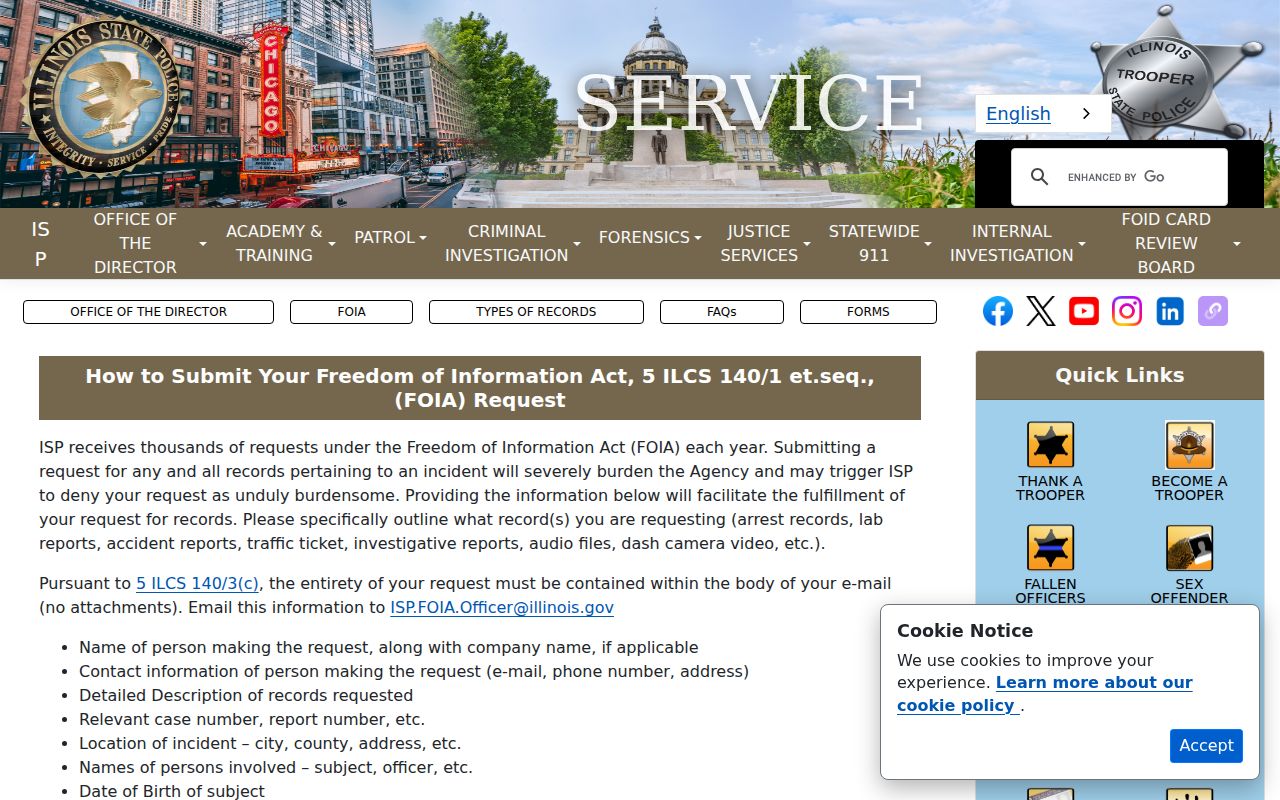
The same rule applies across Illinois: send the request to the agency that created the report. Illinois FOIA normally gives a public body five business days for a noncommercial response, subject to a written extension and lawful exemptions. Illinois investigations, victim details, private data, and safety concerns may require withholding or redaction.
From Illinois Arrest to Rap Sheet
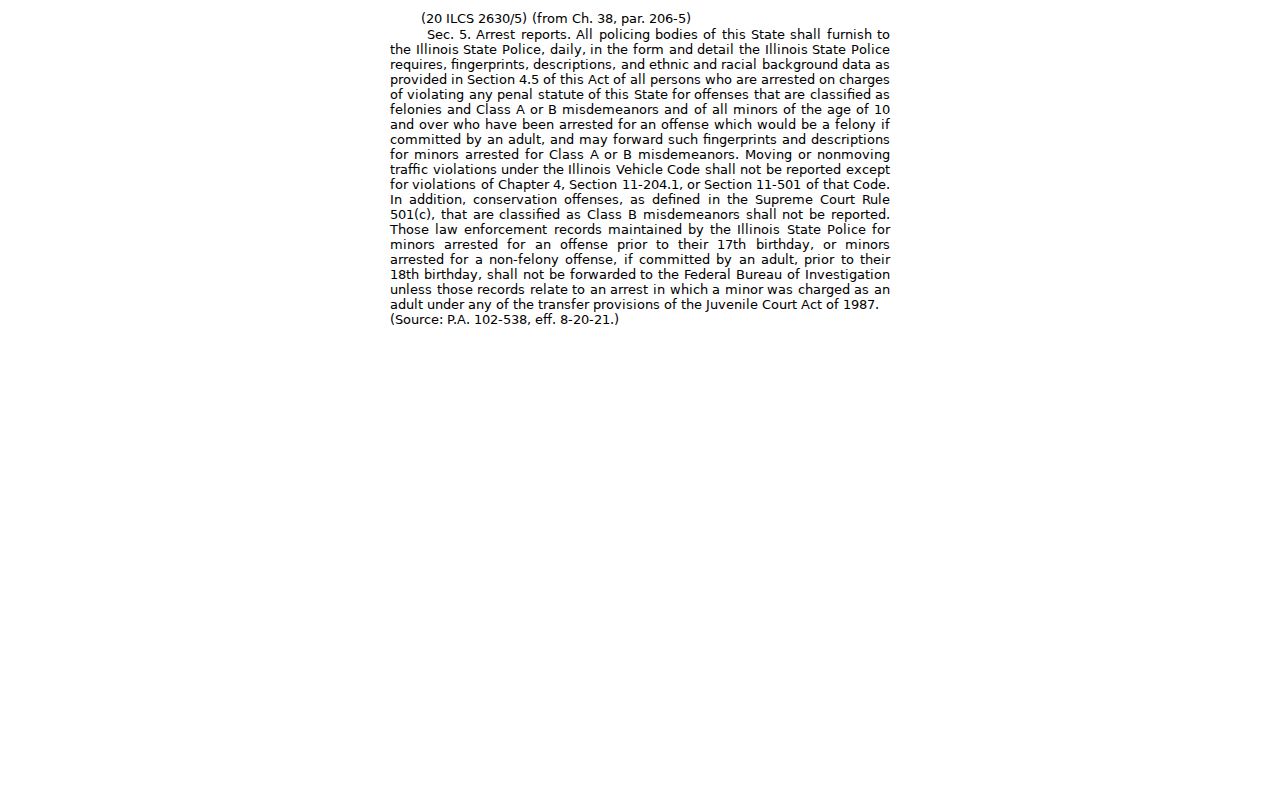
Illinois law requires daily reporting of fingerprints and charges for covered arrests. The Illinois categories include felonies and Class A or B misdemeanors, while the statute contains exclusions and special rules. A live-scan fingerprint transaction receives a transaction control number, or TCN. That Illinois event can then connect to the person's fingerprint-supported Illinois State Identification record.
Data flow: Arrest › Fingerprints › Illinois State Police Bureau of Identification › Disposition Reporting
The official text of 20 ILCS 2630/5 shows the Illinois arrest and fingerprint reporting duties. It helps explain why a citation without a custodial fingerprint event may not appear like a booked arrest in the repository.
After an Illinois filing, prosecutors and circuit clerks report charge changes and outcomes. That later data closes the arrest cycle. A missing Illinois disposition does not prove the case remains open, and no current official statewide completeness percentage is available. The filing county's certified disposition is the best source when the statewide event is incomplete.
Illinois Arrest Data Products
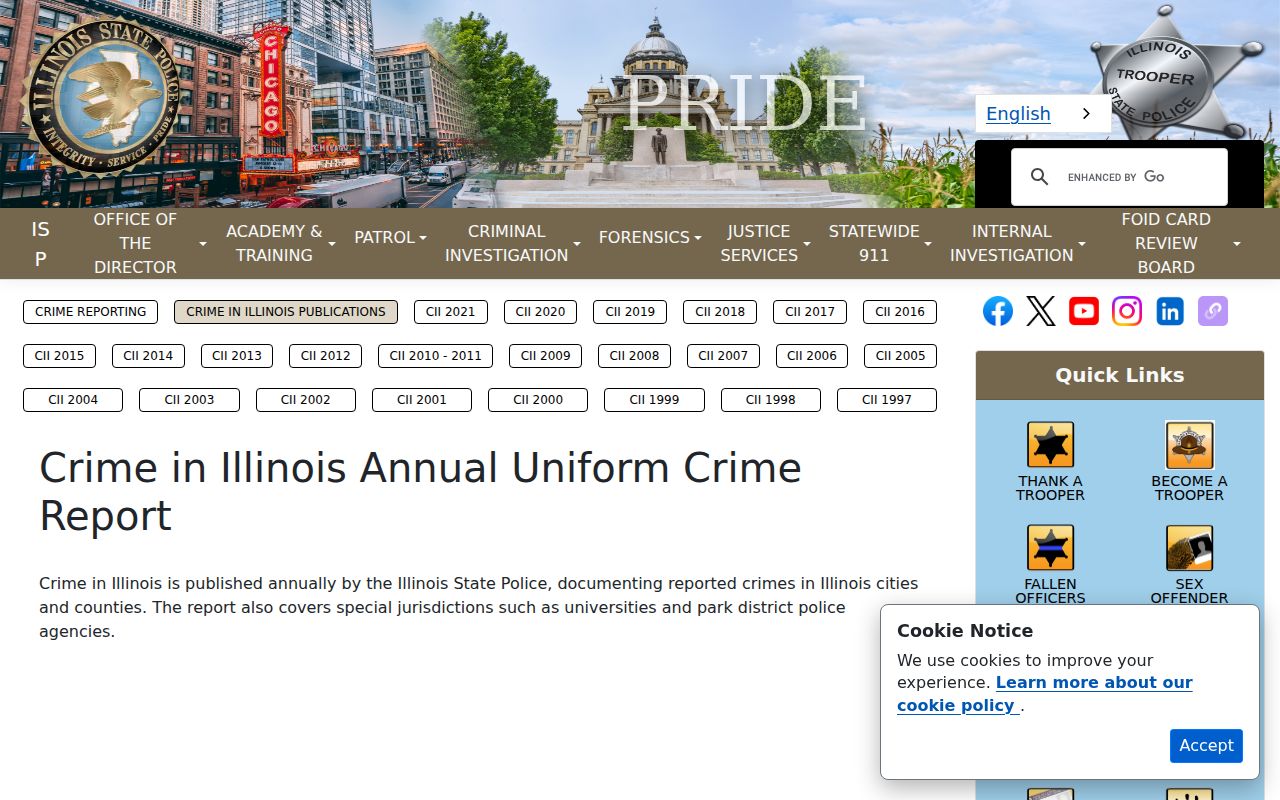
Illinois publishes two useful statewide data products, and they answer different questions. The ISP Crime in Illinois reports present annual Uniform Crime Reporting material from police departments, sheriffs, universities, park districts, and other reporting jurisdictions. Participation and reporting changes can shift a trend. The reports should always be read with the stated year and coverage notes.
The ISP Crime in Illinois report library is the official source for those annual publications.
By contrast, the ICJIA Arrest Explorer uses aggregated adult ISP criminal-history arrest data from Illinois. It modifies data for privacy and excludes Illinois juvenile arrests, Class C misdemeanors, and local ordinance violations. ICJIA therefore warns that it is not official crime statistics. An arrest count also is not always a count of unique people.
Illinois Arrest Lookup Options
No one Illinois portal supplies every current Illinois booking, police narrative, pending court case, and statewide history. A recent Illinois arrest search starts at the county level. CHIRP is an Illinois public conviction-information product, not an unrestricted arrest database. ISP Access and Review is the fingerprint-based way for a person to inspect their own Illinois transcript.
- Identify the arrest location and agency. If only a city is known, determine its county first.
- Check the official county sheriff jail roster or call booking for current custody. Use the directory of all 102 Illinois counties to reach the local layer.
- Search the filing county's circuit-clerk docket. Case codes such as CF, CM, DT, and TR help narrow the record type, though a new filing may take time to appear.
- Request the narrative from the arresting agency. Give the report number, date, place, and identifying details when available.
- Use CHIRP for Illinois conviction information or ISP Access and Review for your own fingerprint-linked state record. Compare any arrest entry with the court outcome.
- After a prison transfer, search IDOC. Federal custody belongs in the federal Bureau of Prisons system.
Inside Illinois Arrest Explorer
The official ICJIA Illinois Arrest Explorer is designed for aggregate research, not a search for private individuals. Users can switch among arrests, arrestees, arrests per arrestee, and arrest charges. Available splits include county and, for relevant tables, age group, sex, race, crime type, offense class, or offense category.
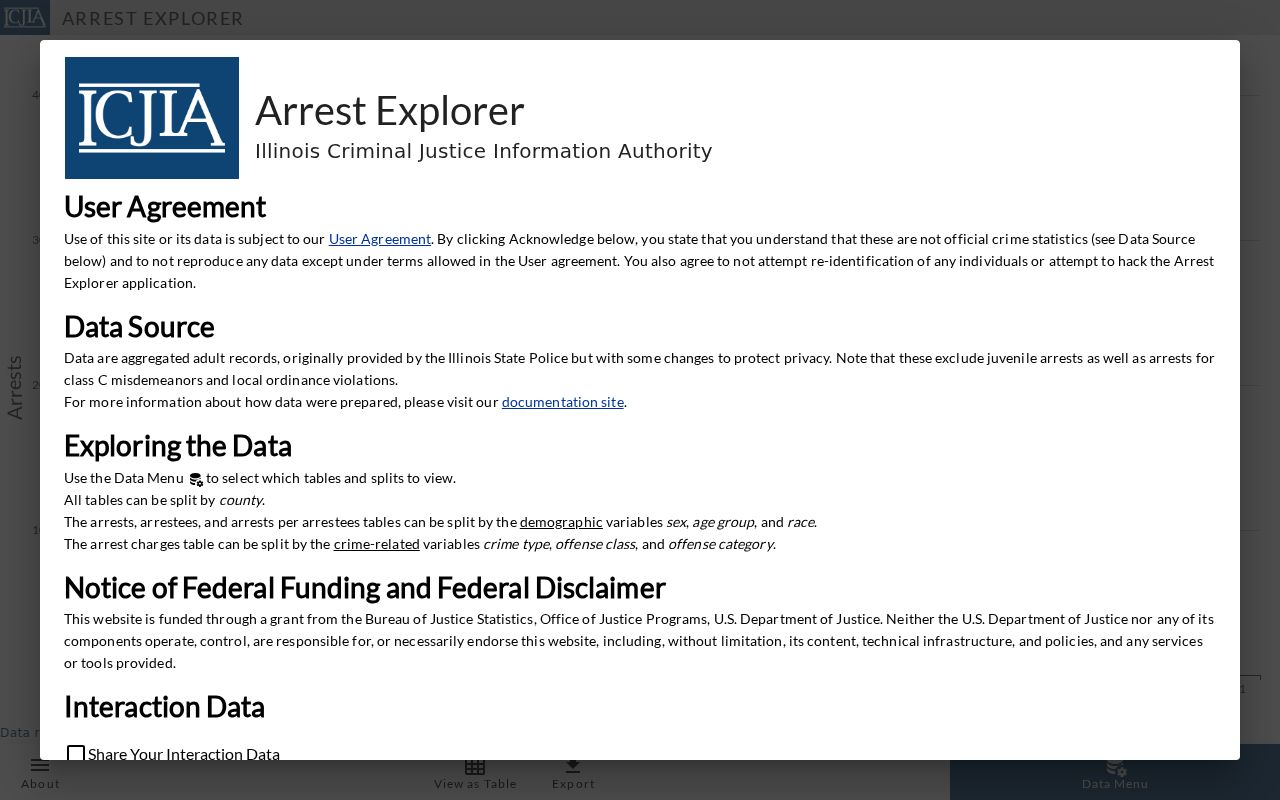
A table view can make Illinois counts easier to compare, and an export option is subject to the tool's agreement. The acknowledgment bars reidentification attempts. Illinois results describe recorded enforcement activity, not guilt, victimization, or a complete count of all Illinois arrests. Multiple arrests can involve one person, and changes in agency participation or coding can affect apparent trends.
Fields on Illinois Arrest Records
An Illinois arrest or booking record identifies the event as it was known at intake. Field names differ across Illinois counties. It can show Illinois custody status and the officer's original allegations, but it does not establish a conviction or final sentence.
| Arrestee Name & Identifiers | Legal name, aliases, birth information, limited physical descriptors, fingerprints, or an Illinois SID when present. |
|---|---|
| Arrest Date & Location | The date, time, and place tied to the arrest or intake event. |
| Arresting Agency | The police, sheriff, ISP, or other authorized agency, often shown with an ORI or report number. |
| Charges at Booking | Alleged offenses, Illinois citations, and classes recorded before prosecutors make final filing decisions. |
| Booking Number & Mugshot | A local intake number and, where law and agency practice permit, a booking photograph. |
| Release or Detention | Current custody, release conditions, court assignment, next date, or transfer details when posted. |
Victim and juvenile information, medical facts, private identifiers, active-investigation material, and sealed or expunged events may be restricted. Illinois booking photos are not collected in one official statewide gallery. Availability changes by county and agency under FOIA exemptions, court orders, and local publication choices.
Illinois Pretrial Record Changes
Illinois replaced cash bail with release conditions or judicial detention on September 18, 2023. Older booking entries may use bond fields that do not map cleanly to today's process. Under 725 ILCS 5/109-1, a person arrested for an offense eligible for denied pretrial release must reach an accessible judge without needless delay and within 48 hours. The law also directs citation rather than custodial arrest for offenses below a felony or Class A misdemeanor unless a listed safety, persistence, or health circumstance applies.
The Illinois Courts publishes Pretrial Fairness Act data resources, with a clear warning that the current dashboard set does not cover all 102 counties.
Those resources give Illinois context but do not replace a person's county docket. Read Illinois release, detention, appearance, and custody fields under the rules in force when the record was created.
Illinois Jail or IDOC Search
An Illinois county jail and an Illinois prison are separate systems. Illinois county jails handle many recent bookings, people awaiting court action, people detained after a pretrial finding, and some local sentences. Each county sheriff or corrections agency controls its roster. The Illinois Department of Corrections receives people committed to state prison and keeps a different corrections record.
When a name disappears from a county roster, check the docket for release or transfer information. If a prison commitment followed, use the IDOC Individual in Custody Search by last name, IDOC number, or birthdate. It covers current publicly disclosable incarcerated and parole entries, not a full historic arrest archive. A missing result may also reflect maintenance, release, another county, or federal custody.
Note: A transfer from county jail to IDOC changes the custody source, but the arrest report and court case remain with their creators.
Fixing Illinois Arrest Dispositions
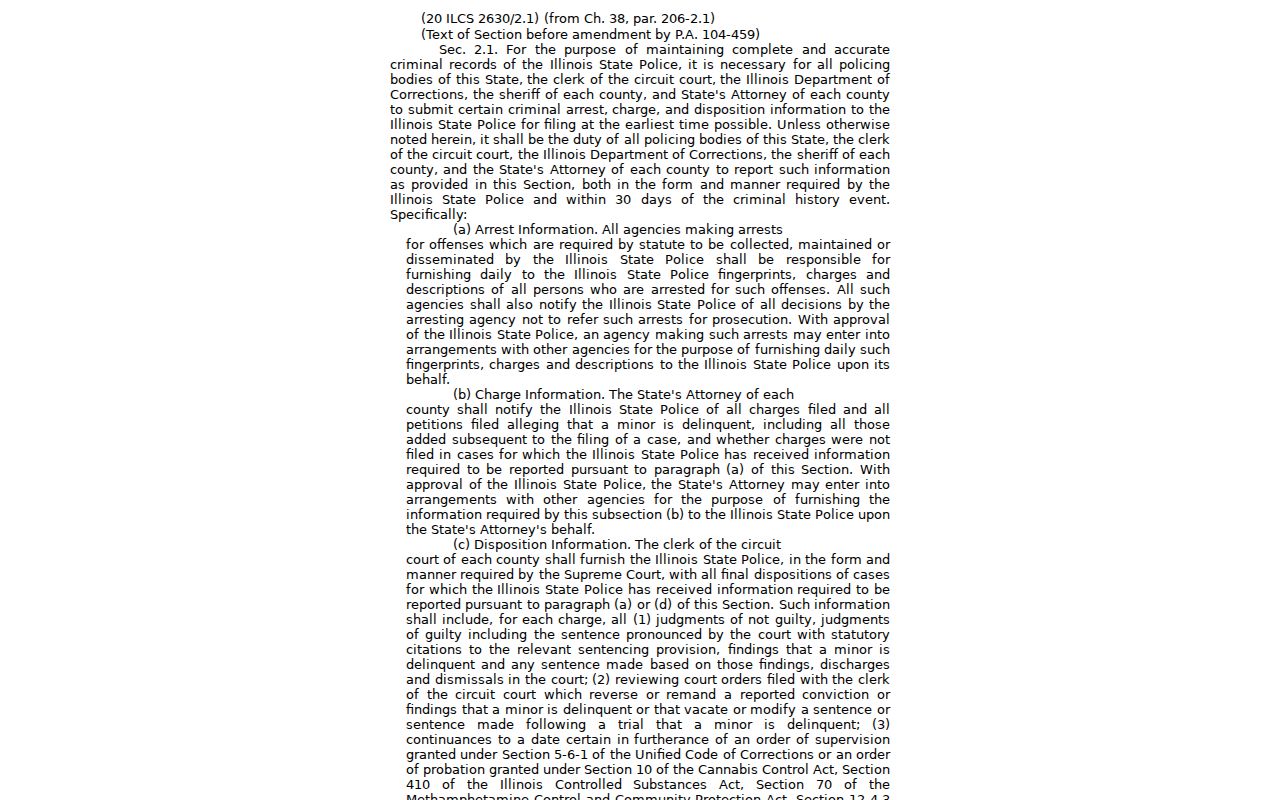
Illinois strengthened its reporting feedback loop in 2026. Under 20 ILCS 2630/2.1, agencies that receive an ISP notice about missing, incomplete, or incorrect data generally must respond within 30 days by correcting the entry or explaining the obstacle and expected completion time.
For an error on your own Illinois transcript, obtain ISP Access and Review through an Illinois-licensed live-scan vendor. Review the Illinois arrest cycle, charges, and outcomes. Then support a Record Challenge with the certified county disposition or arresting-agency documents. The Illinois county source record is vital because ISP can correct its repository entry, while the clerk or agency controls the original event document.
Clearing Illinois Arrest Records
Expungement and sealing have different effects in Illinois. Expungement removes, destroys, or returns eligible records as the statute directs. Sealing restricts ordinary public visibility while preserving access allowed by law. Eligible non-conviction results and some supervision or qualified probation matters may qualify, while many convictions follow the narrower sealing path.
The request is filed with the Illinois circuit clerk in the county holding the arrest or case. A person with Illinois cases in several counties may need separate filings. Illinois Courts supplies an approved statewide request, case list, additional-case sheets, proposed order, and service papers. Fees vary by county, and a court-fee waiver form is available. Public Act 104-0035 phases in parts of the Illinois Clean Slate Act from 2028 through 2030, so it should not be read as present, automatic clearing of every old record.
Illinois Arrests and Convictions Compared
An Illinois arrest is a custody or accusation event. A conviction is a court judgment after a guilty plea or finding. Illinois treats those records differently, and the public CHIRP inquiry is a UCIA conviction-information product. It cannot prove that no arrest, pending case, sealed event, or unreported disposition exists.
| Arrest Record | Conviction Record | |
|---|---|---|
| Created by | Arresting agency and county jail; a fingerprint event may be sent to ISP. | Circuit Court judgment reported by the clerk to the statewide repository. |
| What it proves | A person was arrested, cited, or booked on stated allegations. | Guilt was established by a plea or court finding on a charge. |
| Public access | Local logs, agency FOIA, jail rosters, or a subject's ISP Access and Review, with legal limits. | CHIRP conviction inquiry and the filing county's court record, subject to restrictions. |
| Relief | Eligible non-conviction events may qualify for expungement or sealing. | Many convictions have narrower sealing eligibility and statutory exclusions. |
Note: An Illinois arrest with no listed disposition is not proof of guilt; verify the outcome with the circuit clerk that holds the case.